
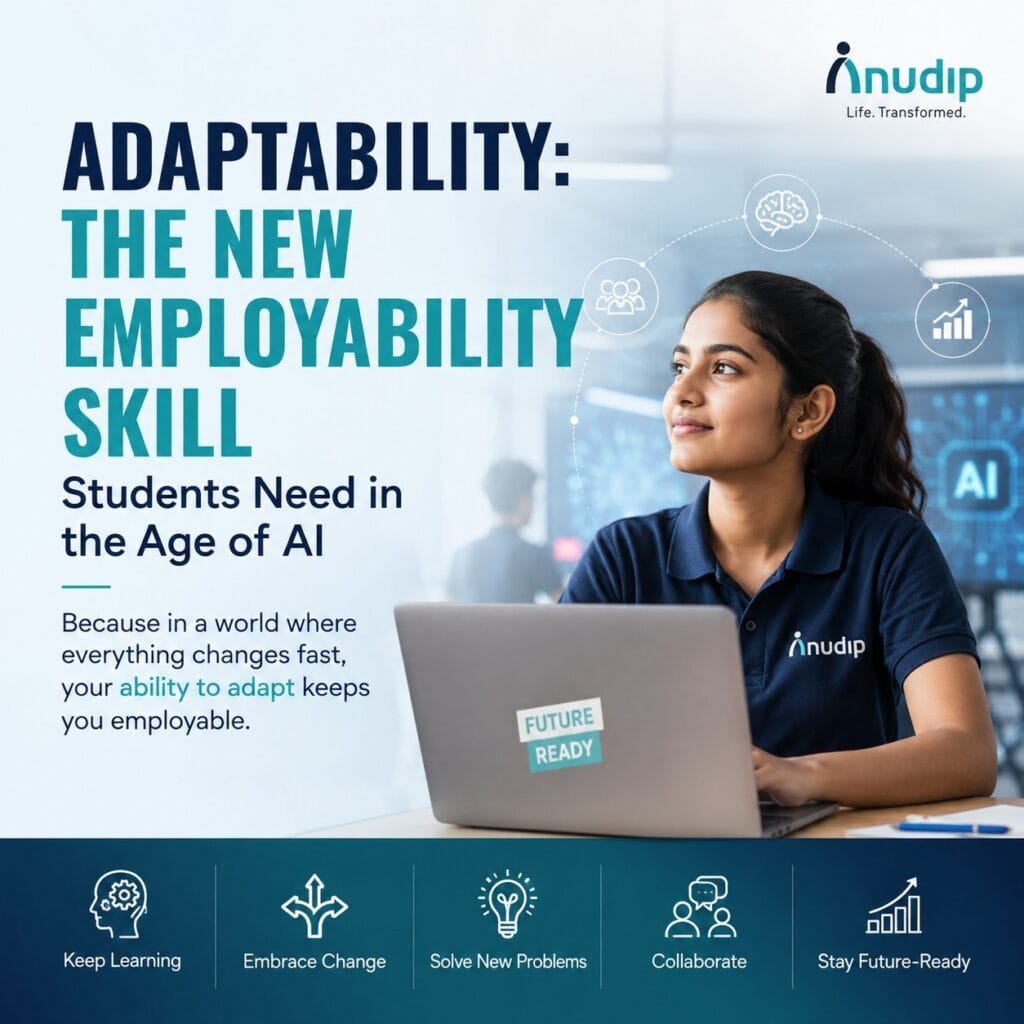
– By Shubhodeb Bhattacharya
Machines are now capable of drafting emails, writing codes and analyzing data faster than most humans and are even expected to do many more activities in the upcoming days. So, the question is what actually makes you employable? The answer is not acquiring or mastering a degree or a single skill, but the ability to keep learning, unlearning, and relearning as the ground shifts. This is adaptability, the trait that lets you retain your job in the 21st century market.
Adaptability is no longer considered an afterthought; it’s the core employability skill that most recognized skilling institutes are focusing on currently.
By reading this article, you will get to know the significance of adaptability, the on-demand skill sets shaping the present job market, and the right way of getting trained that can help you sync with current employability trends.
Why is adaptability the employability skill that matters the most?
To put it simply: technical skills come with a shelf life. Any tool, coding language, or platform experiencing high demand today can be automated or replaced within a short span of time. Adaptability is a skill that doesn’t lapse, the human trait that assists you in picking up whatever comes next, whether a new tool, role, or trend.
At Anudip, we maintain 70% placement rates across all cohorts. However, in 2021, due to AI disruption, our post-placement data showed a steep fall in retention rates. This made us extend our pedagogical focus to adaptability training, alongside digital and AI literacy, so students aren’t just job-ready; they’re change-ready.
How are we training our students for adaptability in the 21st century economy?
78% of Indian graduates aren’t considered job-ready straight out of college. Focused on the next-gen workforce, we equip youth with 21st-century skills for lasting careers.
We focus on building adaptability through deliberate habits and in the right learning environment.
Here’s what that looks like in practice:
Assigning unconventional tasks
We deliberately push our students beyond routine problem sets. Our ANU AI Coach, built into our Learning Management System, doesn’t hand over answers. Instead, it nudges students to reason their own way to a solution. That kind of unscripted problem-solving is where adaptability actually gets tested and built.
Finding geographically diverse placement opportunities
A job in a new city, or a new part of the country, forces adjustment: a new work culture, new expectations, and sometimes a completely different pace of life. Many students prefer to stay close to home, but we push them toward better opportunities outside their hometown, city, or even state.
Through a placement-linked model spanning over 400 colleges, more than 100 community centres, and 450-plus corporate hiring partners, we make sure our students aren’t limited to opportunities close to home. Getting them out of their comfort zone through councelling is exactly how we build that adjustment into a skill.
Encouraging peer learning/group discussions
Adaptability grows faster in a room full of different perspectives. We highly encourage and execute such sessions. When our students explain ideas to each other, debate approaches, or troubleshoot together, they pick up ways of thinking no textbook can teach. Between sessions, iChat gives them a judgment-free space to keep practicing spoken English and interview skills on their own.
Providing constructive feedback
Growth needs friction. We don’t just tell our students what’s right; we tell them what isn’t working and why. Our JD CV Matcher does this at the career stage too, reading live job descriptions and showing each of them exactly where their skill profile is ready and where it still needs work.
Preparing for futuristic skills
We don’t train for today’s job market alone. Programmes like DIYA, DeepTech, and AI Academy are built around Generative AI, cloud technologies, and the emerging roles employers are hiring for. This way, we equip our students to become future-ready, not just for what’s already here.
We’re also expanding into green skills. Through our partnership with green corporates, we’ve trained over 1,500 students in Solar PV installation and Electric Vehicle mechanics across Industrial Training Institutes in West Bengal, Karnataka, Maharashtra, and Telangana. In Jharkhand’s coal transition regions, our pilot green skilling project is helping youth build a path into the green economy as the old one winds down.
None of these habits work in isolation; they build on each other, turning a student into someone who doesn’t just undergo and survive change but expects it.
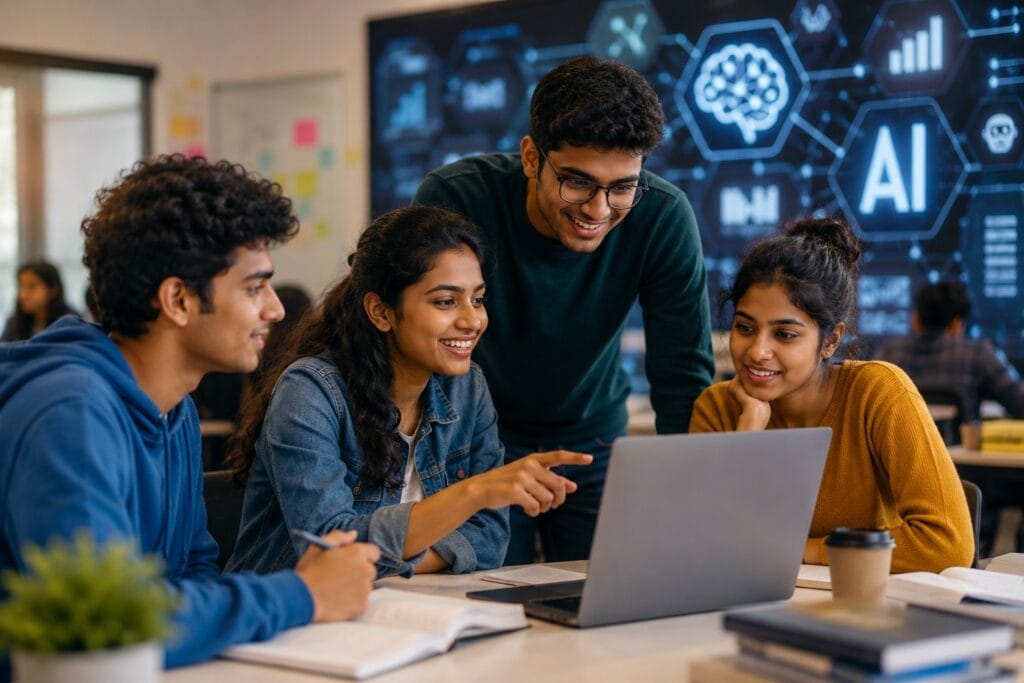 Adaptability: The employability skill every student needs in the AI Age
Conclusion
The digital economy will not wait for anyone to catch up. Machines will become faster, tools will continue to evolve, and the ground will continue to shift. In this evolving situation, adaptability only stays constant, an employability skill built to outlast each of those shifts.
At Anudip Foundatiuon, our innovation driven learning model is built keeping that constant in mind, since 2007, impacting over 730,000 youth across 22 states, so our students don’t just land a job; they stay ready for whatever comes next.
FAQs
- What are employability skills in AI?
Beyond technical know-how, they include adaptability, critical thinking, digital literacy, and communication, skills that keep someone relevant as tasks get automated.
- What skills will be in demand in the age of AI?
When we talk about highly demanding skills that employers look for, are: digital fluency, AI readiness, critical thinking, problem-solving, communication, collaboration, etc.
- Why does it matter which NGO you choose for skilling and training?
It’s the right NGO that makes the difference: providing industry-aligned training, practical digital skilling and robust placement support to make a course into a real career and not just a certificate.