
-By Shubhodeb Bhattacharya
The AI economy is drastically surging and industries are experiencing unparalleled impact. It is also redefining what it means to work in the modern era. However, an imbalance underneath this revolution, which must be addressed with utmost urgency.
The spreading skills gap is blocking millions of people, particularly youth, women and those from marginalized communities. This makes way for unequal access to the prospects AI has to offer.
Realizing the fact, policymakers and organizations are raising their hands and asking how to measure social impact in education programs and build a future of work for underserved communities? To them, this comes as a testament, proving that access to training is just not adequate
Outcomes must include employment, income growth, and long-term career stability to define real progress.
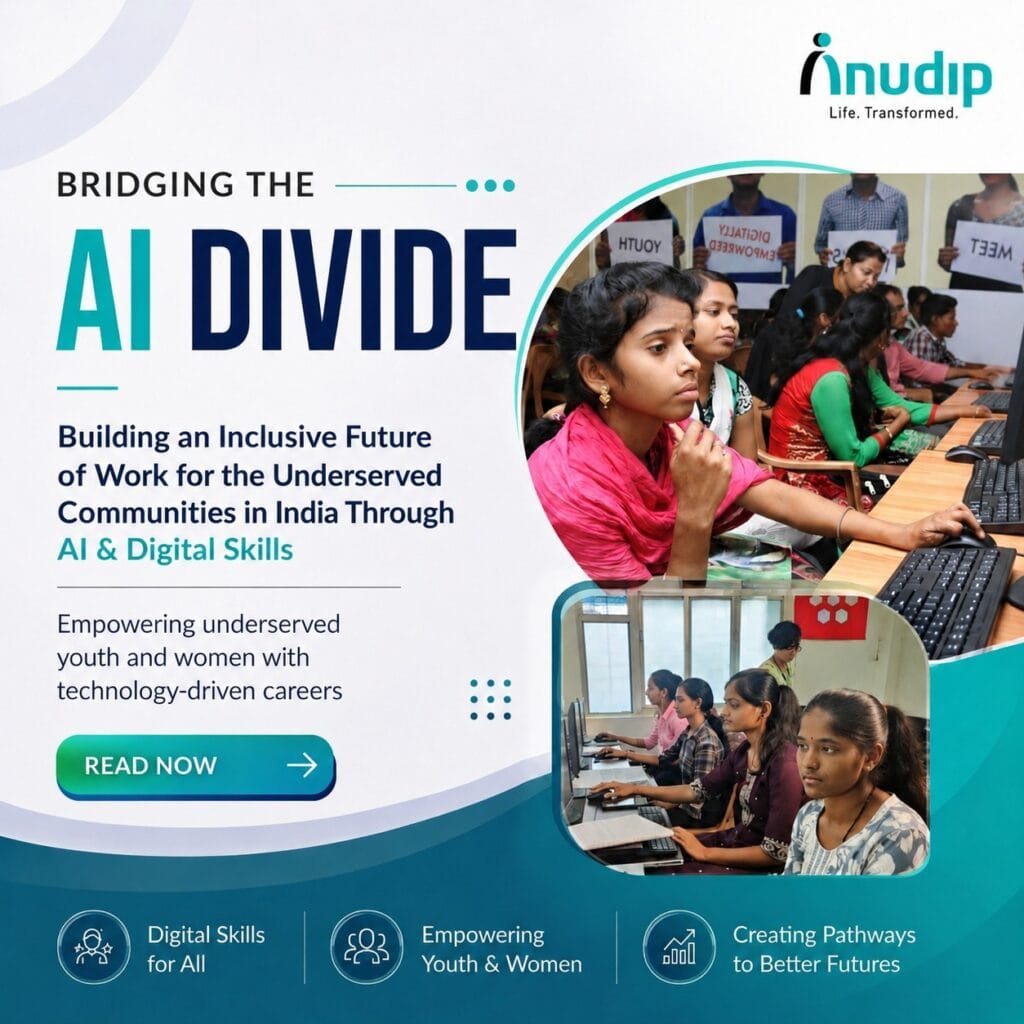
At the forefront of driving these outcomes is Anudip Foundation. Since 2007, Anudip has taken a pivotal role in unleashing the maximum potential amongst marginalized youth. The tools? Equipping them with market-ready digital and AI skills.
To date, the organization has impacted over 600,000 individuals across India, 53% of them women. Moreover, it includes distressed youth, survivors of human trafficking and tribal men and women.
But standing here in 2026, the new question is: how are these lives being impacted and trained to fit in the new AI-powered economy?
Beyond Access: Why Digital Skills Alone Aren’t Enough
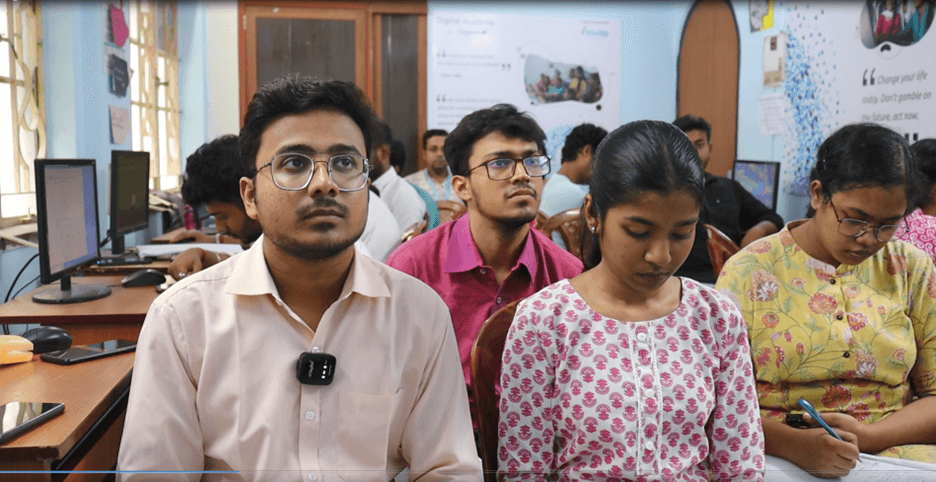
The emergence of the AI economy is experiencing an increased need for talent. Based on PWC’s global research, jobs related to artificial intelligence have been the fastest-growing category.
Many global efforts have tried to close the gap by simply expanding access to digital skills to develop the future of work for underserved communities. However, actual job readiness is way more intricate. It calls for technical expertise in the following:
- AI tools
- Collaborative abilities
- Strong communicative skills
- High adaptability to newer systems, tools and processes
- Practical application of knowledge
For marginalized youths, add on barriers like limited work experience, lack of mentorship and confidence, social constraints etc. exacerbates these challenges.
A holistic framework is the need of the hour that can integrate education with occupation, and upskilling with steady career support. It must be designed for driving bona fide economic mobility for millions of individuals barred from the tech domain.
Inclusive Workforce Development for the Future of Work for Underserved Communities
A successful workforce development is grounded upon three pillars:
- Approachability: reaching out to rural, economically weak, and first-generation workers.
- Relevance: synchronizing the curricula with actual industry requirements.
- Continual involvement: providing support to learners starting from training till they get hired and beyond.
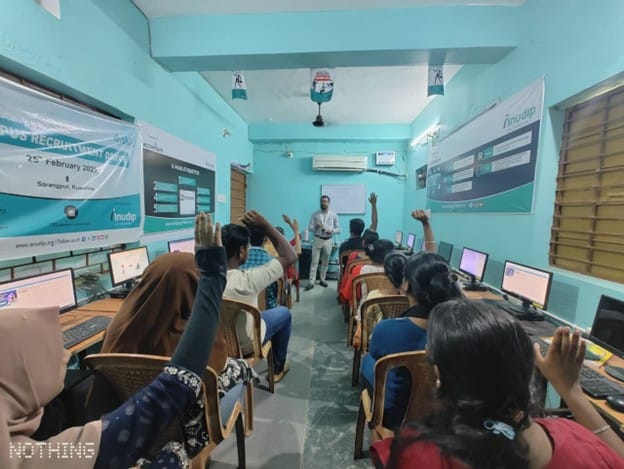
From three centres in West Bengal’s Sundarbans region, Anudip Foundation has expanded its all-India operations. Today, it has more than 90 skill and career development centres spread across 22 states. It collaborates with over 400 corporates with the sole purpose of connecting underserved youth and especially women with digital livelihoods and catalyzing inclusive growth.
Building AI Based Programs
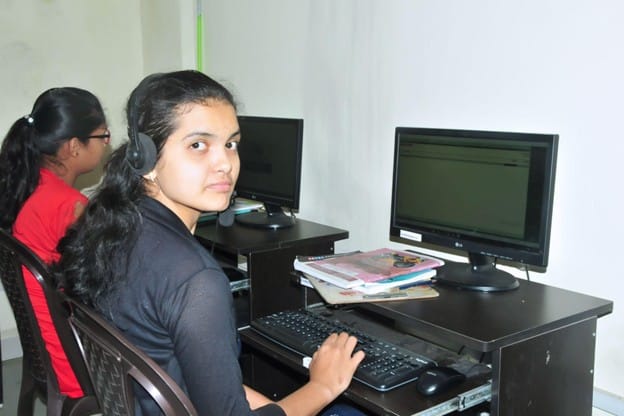
Over 80% of Indian businesses surveyed said their workforce would require significant reskilling because of AI adoption. To unlock new prospects in employment and empowerment, underserved communities must acquire AI-driven skills.
Anudip Foundation suite addresses this issue directly through its courses. Over the years, these skilling programs are designed in such a way that students not only learn the needed skills, their confidence level also gets boosted.
A quick look at these programs:
- AI Academy — introduces AI, data analytics, and generative AI to underserved learners
- FuturePro — a digital skills and employment
- DIYA (Digital Inclusion of Young Aspirants) —builds AI-usage capabilities through technical and language readiness
- DeepTech — advanced training for specialized technical roles
Anudip’s annual reports clearly indicate that we are progressing at a good pace when it comes to skill development success rates in India. Reports show that participants have experienced an impressive 41% increase in confidence when it comes to AI-powered work. Moreover, Anudip’s internal reports suggest that a staggering 20% increase in salary outcomes happened when our beneficiaries sit with AI skills on interview chairs.
Promoting Use of AI-Driven Tools
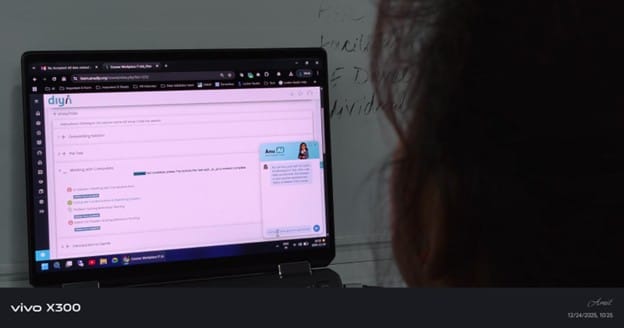
Anudip Foundation endorses the use of AI tools by embedding AI directly in learning, communication, assessments, and employability support. We developed 3 major in-house tools to promote AI tool usage which are given below:
- ANU AI: Socratic AI learning coach that integrates with Anudip’s LMS to tailor learning and strengthen critical thinking.
- iChat: Our AI-driven interview prep, English communication and coding practice platform in a low-pressure environment.
- JD CV Matcher: Developed an AI tool to match learner profiles with live employer job descriptions for better placement fit.
At Anudip, students use AI tools for coding, English practice, mock interviews, research, presentations and workplace readiness on both in-house and external platforms.”
Closing the AI Gap for Women to Strengthen the Future of Work for Underserved Communities
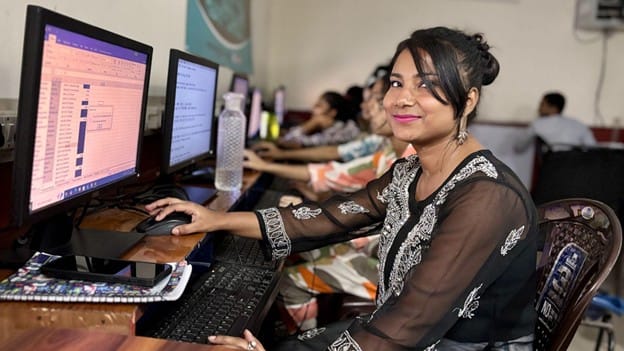
Anudip Foundation is working to bring women into the AI economy through combining AI skilling with targeted access, confidence building and employment pathways for underserved women.
Here are some initiatives that help us ensure high women participation to build the AI workforce:
- Ichat, AI enabled learning platform, receives approximately 40% more activity from women compared to a conventional classroom
- Digital and DeepTech training for women from low income and rural environments
- Collaborations with entities such as UNICEF, GIZ to enhance digital inclusion and AI literacy for women.
- Mock interviews, communication training and AI-assisted learning for confidence-building and employability support
- Strong women participation targets, with some programmes aiming at 40-50% female participation
- More than half of Anudip’s placed graduates are women through formal employment routes.
Anudip is helping first-generation women learners move from digital exclusion to future-ready careers through technology, mentorship and access.
From Skills to Jobs: Closing the Last-Mile Gap in AI Workforce Development
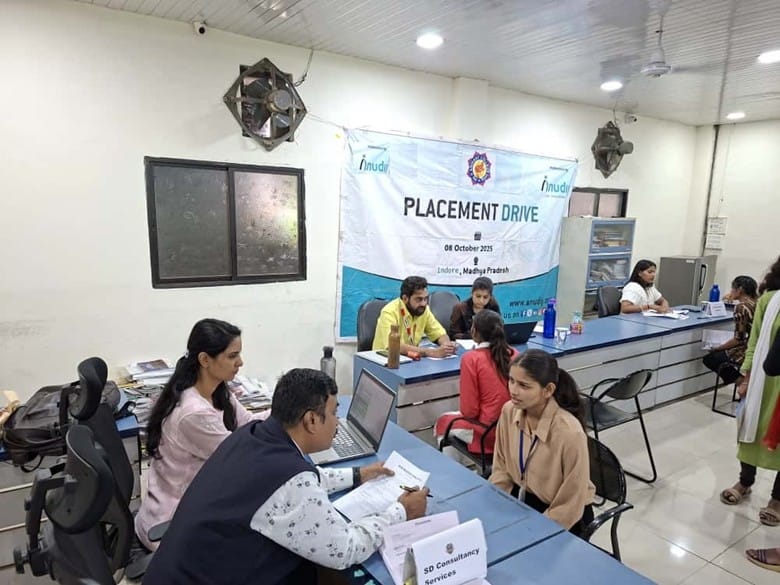
Anudip Foundation joins the last-mile gap in AI workforce development by embedding employability support as a core part of its learning ecosystem. This way, the organization goes beyond skilling to link training with real-time industry demand and readiness for placement.
Key placement-related interventions include:
- AI Based JD Job Matcher matching learner skill profiles to live employer demands with over 90% accuracy in skills to job matching
- Co-created with 400+ corporate partners for industry-aligned curriculum that ensures market relevance
- Mock Interviews, AI Tests and Communication Training to Boost Workplace Readiness
- Placement first training model directly connecting the learners to the hiring opportunities across IT, BFSI, retail and digital services
- Continuous employability tracking via AI-enabled LMS systems and performance benchmarking
- Post-placement support and retention tracking to support learners to transition successfully into formal employment
All this translated into AI-enabled cohorts commanding salary outcomes over 20% higher, reflecting stronger employability, confidence and alignment with the changing needs of the workforce.
Building a Future of Work for Underserved Communities
The question is not whether the AI economy will grow — it definitely will. Whether that growth will be equitable or not is the real concern. Closing the AI divide demands more than technology. It requires deliberate design, cross-sector collaboration, and sustained commitment that help build the future of work for underserved communities. This is what Anudip has been working on continually for the last 19 years.
Governments must enable, industries must include, and institutions built for impact must keep doing what they do best: turning potential into opportunity, one learner at a time.