From classrooms to careers, and from everyday spaces to workplaces, artificial intelligence is already reshaping how Indians learn, work, and earn. No longer a future promise, AI is redefining job roles, access to opportunity, and pathways to economic mobility across the country.
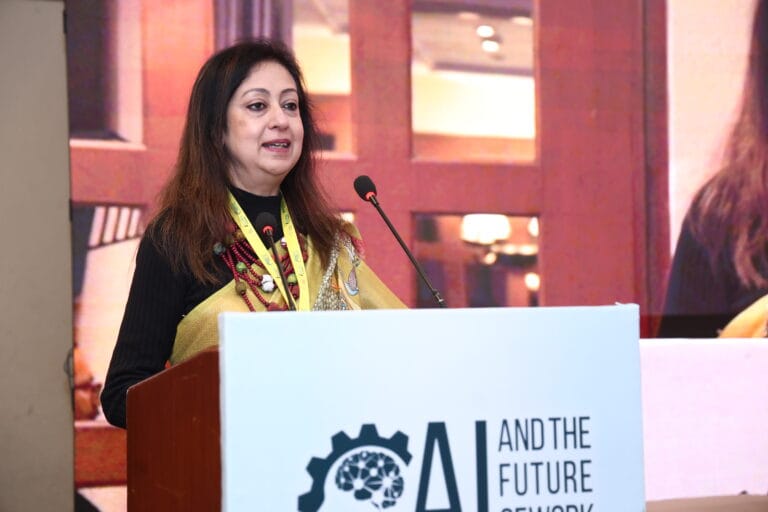
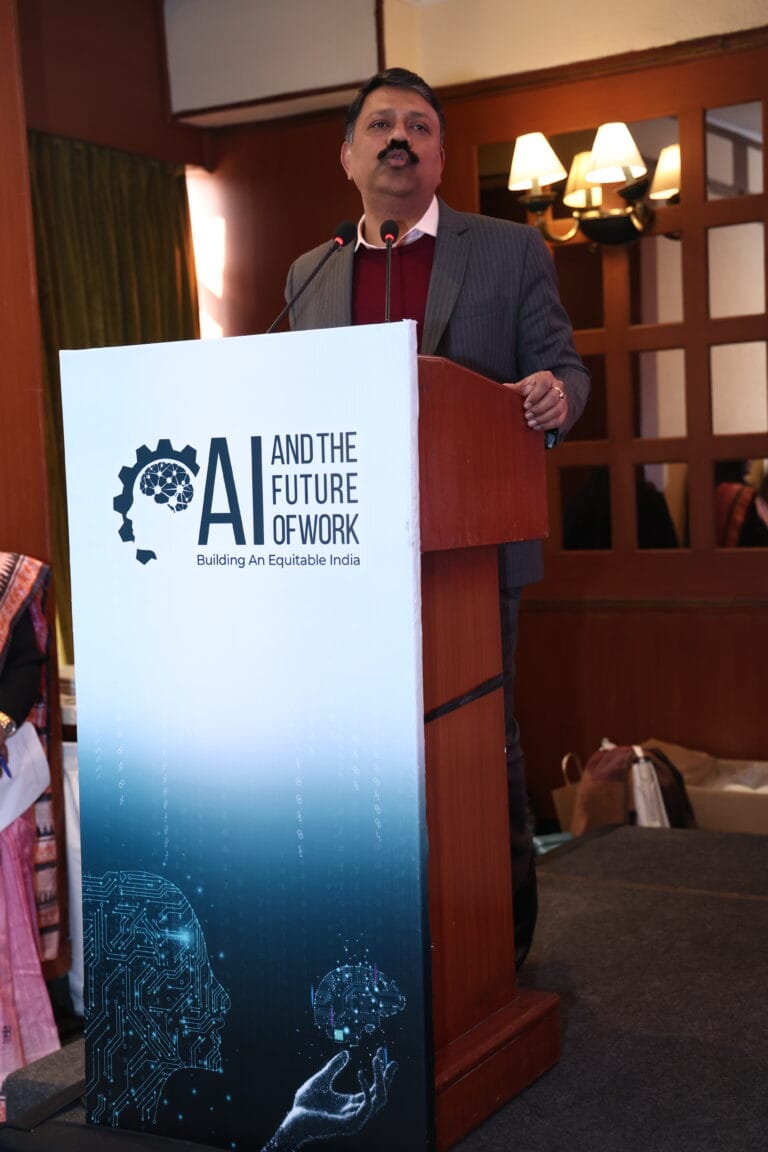
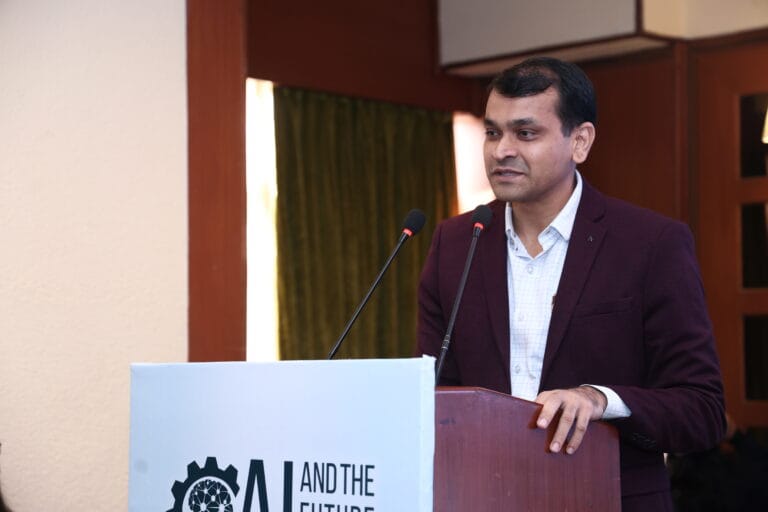
To address this shift, Anudip Foundation hosted a pre-summit event for the India AI Impact Summit 2026 titled “AI and the Future of Work: Building an Equitable India.” The event emerged as a resounding success, spotlighting AI’s transformative role in reshaping the future of work and expanding opportunities for marginalized communities. Bringing together industry leaders, government representatives, and social organizations, the convening marked a meaningful step toward building a more inclusive AI ecosystem in a diverse country like India. Through focused sessions, the discussions explored skilling frameworks, responsible AI development, and the power of cross-sector collaboration to drive impact at scale. The event also featured compelling student career journeys and live AI project showcases, offering tangible evidence of resilient, future-ready training in action.
Building pathways for women to lead, innovate, and shape the AI workforce
Ensuring AI skilling reaches underserved and underrepresented communities
Preparing today’s workforce for AI-driven jobs and transitions
Mobilising corporate and nonprofit partnerships to scale impact

This panel examined what it truly takes to build a scalable AI future for India. A clear and consistent message emerged throughout the discussion: collaboration. The conversation explored how governments, corporates, social institutions, and educational bodies can work hand in hand to drive inclusive, large-scale progress and reach every level of India’s AI ecosystem.
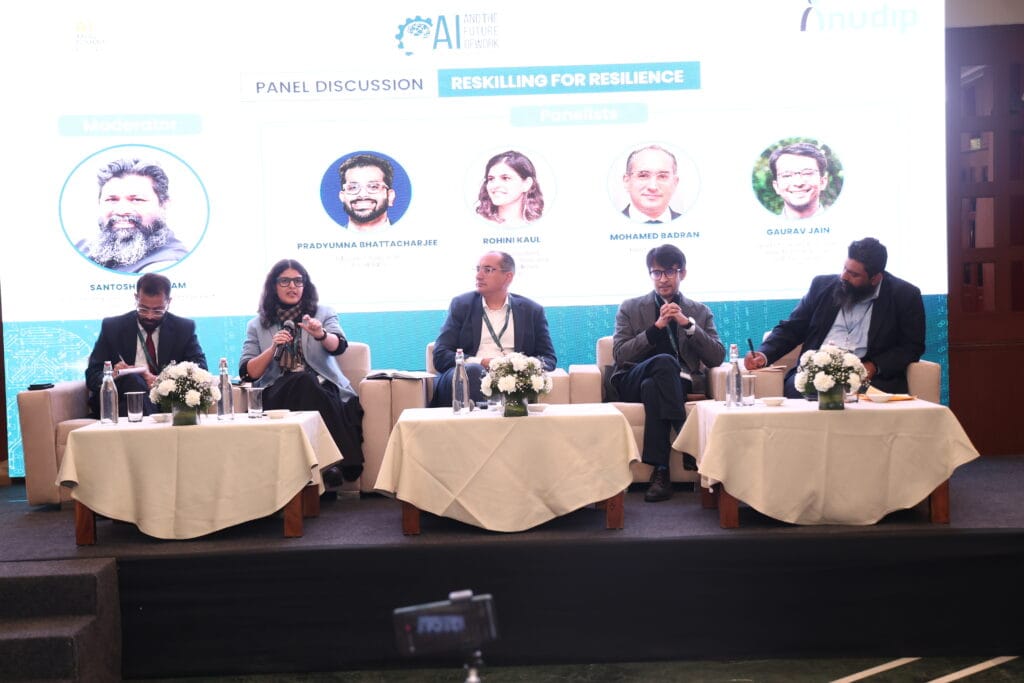
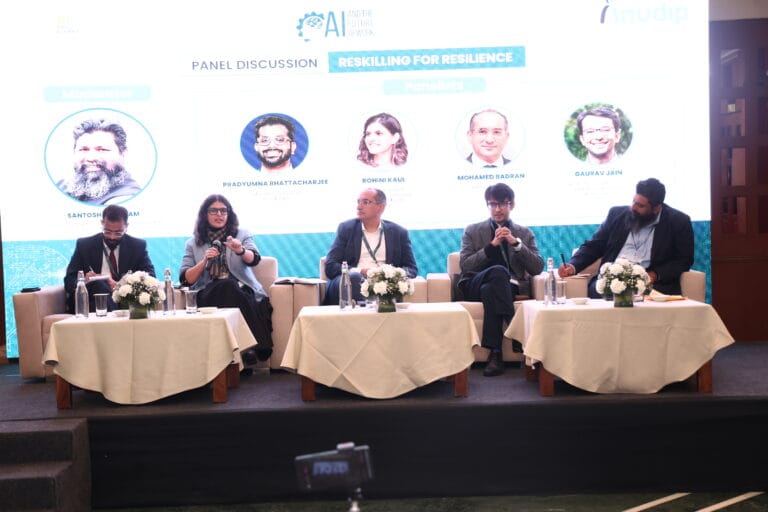
This panel focused on building resilience in AI skilling, emphasizing how students engage with and absorb AI training. The discussion highlighted the need for programs that help learners distinguish between AI’s utility and its pitfalls, ensuring they use AI as an enabler—not a crutch. Panelists stressed that AI education must strengthen, not replace, critical thinking and problem-solving skills, as overdependence on technology risks cognitive decline and undermines long-term resilience for future generations.

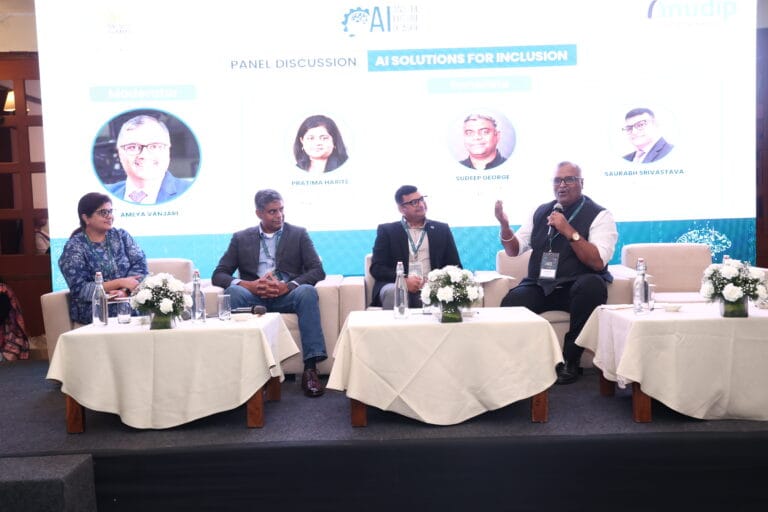
This panel explored AI solutions for inclusion, focusing on how AI can be trained to avoid bias and algorithmic exclusion. Panelists shared how their organizations design and deploy AI systems with inclusion at the core. A key solution highlighted was the hyper-localization of AI annotation—leveraging sectoral and grassroots expertise to train models that are more representative, inclusive, and unbiased in their outcomes.

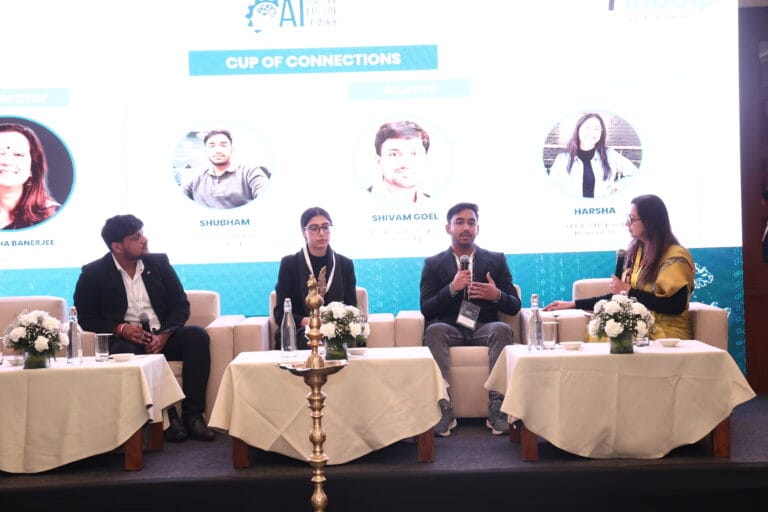
This unique session featured a candid dialogue between Anudip alumni and CEO Monisha Banerjee. Alumni shared their personal journeys from the margins to meaningful roles within the corporate AI workforce, reflecting on the evolving nature of today’s work environment. They also spoke about the importance of continuous upskilling to stay relevant, resilient, and future-ready in their careers.

Anudip students presented impactful AI projects—AI-powered Financial Tracker and Planner, AI-Automated Interviewer, and UltraWatch: Micro Disaster Guard—demonstrating strong real-world capabilities and the powerful potential of talent from underserved communities.