
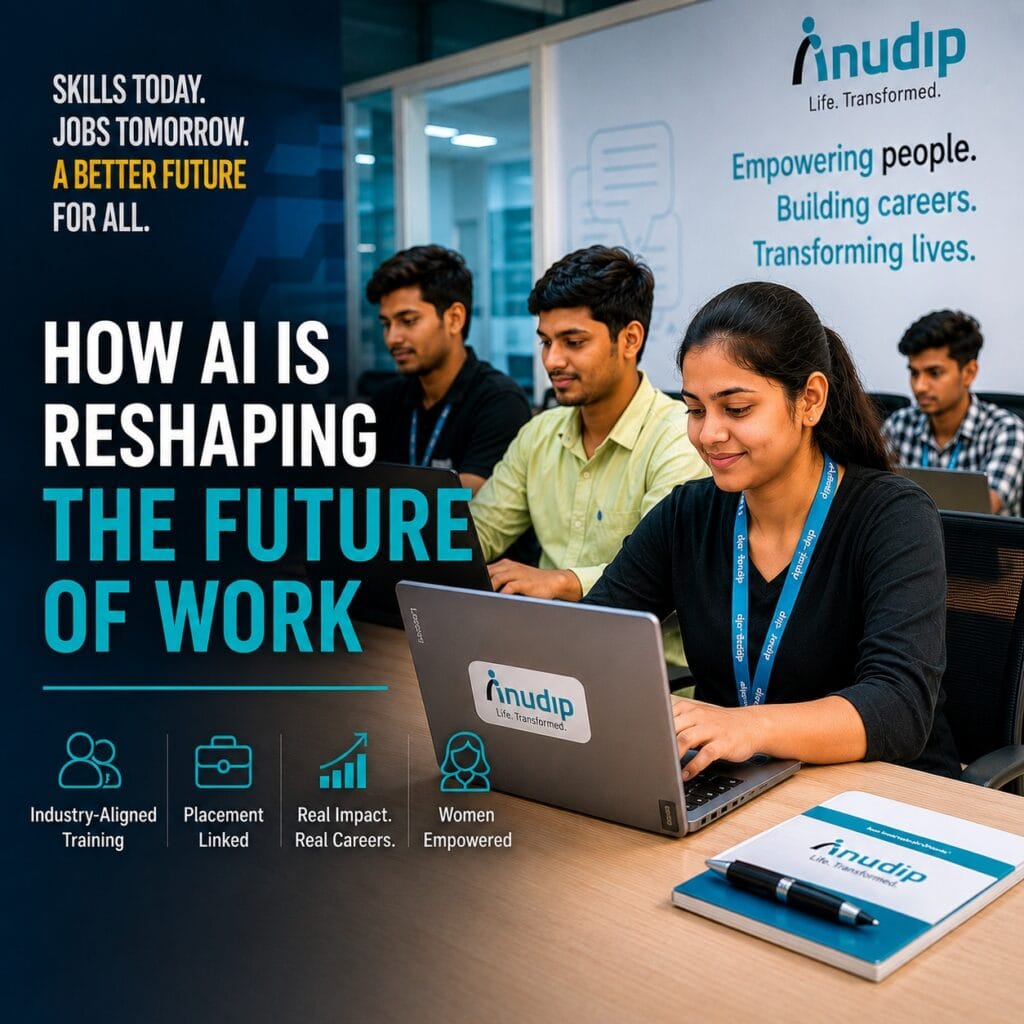
– By Madhuparna Roy Sukul
There’s a quiet shift happening in industries across India, one that’s already rewriting the future of work for underserved communities. Companies that once recruited primarily based on degrees are now focusing on skill assessments. The focus is primarily on AI aptitude tests and practical task evaluations before a candidate reaches the interview stage. Which means, a college certificate or a diploma is no longer enough on its own.
For young people from well-resourced backgrounds, this shift is manageable. They have access to online courses, tech-centric colleges, coaching ecosystems, and professional networks that help them adapt. But the youth navigating this shift from rural districts, smaller cities, and urban fringes don’t have that cushion. For them, this transition is happening without a safety net.
The future of work for underserved communities is not a distant policy concern. It’s an immediate reality and an urgent need. Therefore, the decisions made in the next few years about who gets trained and who doesn’t will shape economic mobility in India for a generation.
AI Is Already Changing Entry-Level Jobs and the Stakes Are Unequal
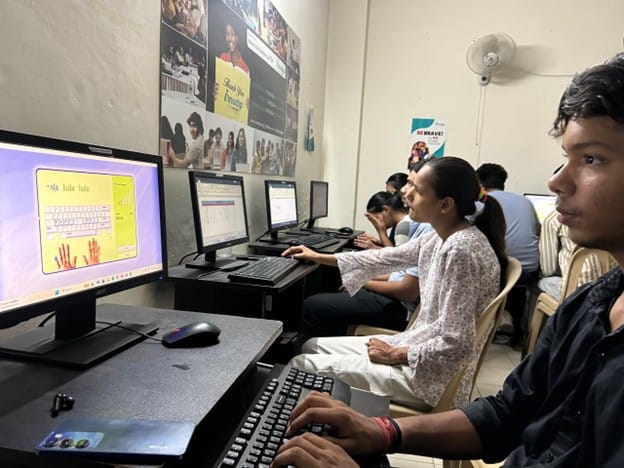
AI isn’t easing into the Indian job market; it’s compressing timelines. Tasks like data entry, customer support, and document processing are now being fulfilled through AI-assisted tools. But does this mean mass unemployment? No. Instead, it indicates transformation. The same jobs now need people who can work with AI, not be replaced by it.
Be it the BPO agents who now use AI dashboards that flag sentiment, suggest responses, and log call outcomes in real time, or entry-level retail-bankers who are now reviewing AI-generated credit summaries, AI is already there in the system. Therefore, skills-first hiring is how employers are filling positions today. The shift is real. But the question is whether you see it as a threat or an opportunity.
Employers aren’t asking for machine learning expertise. They want digital confidence, basic data literacy, and the judgment to navigate automated workflows. That’s an achievable bar — but only with access to the right training.
And that’s precisely where the gap widens. The digital divide in India isn’t just about internet access, but it’s also about the quality of exposure. A young woman from Jharkhand or Chhattisgarh may own a phone, but her experience of the internet is largely social, not professional. First-generation learners don’t know what they’re missing because there’s no one to guide them. For young women, there are additional barriers like limited mobility, family pressure like early marriage, and a cultural assumption that technical careers belong to someone else. These aren’t abstract challenges; they show up in dropout rates and placement statistics across vocational training programs in India.
Rural and semi-urban youth face geographic isolation from industry hubs. The AI economy is opening remote and hybrid job categories, but accessing them requires both digital skills and digital confidence. That confidence has to be built intentionally.
The Digital Skills That Will Actually Matter
The most in-demand entry-level skills in the AI economy aren’t advanced, but specific. Such as:
- Digital literacy helps navigating workplace tools, understanding basic data, and managing digital communication.
- AI-assisted workflow fluency that includes using AI tools effectively, spotting errors, and interpreting outputs.
- Cybersecurity fundamentals such as especially for roles handling customer or financial data.
- Communication skills in both written and verbal clarity that AI cannot replicate.
- Human skills, such as empathy, contextual judgment, and relationship building.
- Adaptability, with respect to the ability to learn, unlearn, and relearn as tools and platforms evolve
The last one matters most, because employers don’t just want someone who can use today’s tools. They want someone who won’t be lost when those tools change.
How Skill Development NGOs Are Bridging the Gap
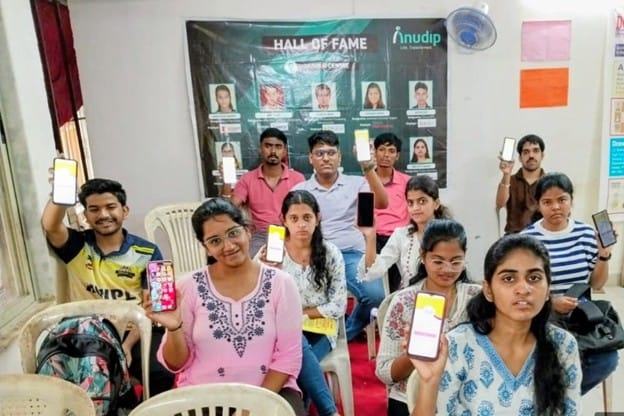
The question for workforce development organizations today isn’t whether to include digital literacy, it’s about whether their curriculum reflects what employers are actually hiring for right now.
Anudip Foundation, working across underserved communities in 22+ states, builds its programs around exactly that. Training is industry-aligned, employer-validated, and placement-linked with hiring partners like Capgemini, Accenture, and TCS actively recruiting from Anudip cohorts.
Beyond the classroom, Anudip has taken AI literacy into the real world. Events like the AI Pre-Summit brought together learners, employers, and practitioners to define what an AI-ready workforce looks like on the ground. The Humans in the Loop screening brought the film’s story off the screen by highlighting its alumni who are women just like the ones depicted, from the same underserved backgrounds, now working in AI at companies like iMerit, Wells Fargo, and Deloitte.
And then there are stories like Mohit Kumar. From a small locality in Ranchi, he enrolled in an Anudip program when higher education wasn’t an option. He read beyond the modules, questioned beyond the slides, and walked out with a systems developer role at Concentrix. An income line rose. A sister’s future steadied.
Multiply one Mohit by thousands and you begin to see what inclusive workforce development actually looks like. Across 600,000+ lives touched, Anudip’s programs have delivered a 70% placement rate, with 53% women getting hired and continuing successfully.
Thus We Conclude: The Future of Work Must Be Inclusive, or It Isn’t a Future at All
India has one of the youngest workforces in the world. That advantage means nothing if young people from rural districts and smaller cities can’t access the emerging economy alongside their metro counterparts.
The AI economy will produce opportunity. But opportunities without access aren’t really an opportunity. If digital skills remain concentrated in urban and well-resourced pockets, India will have squandered its most significant workforce advantage. Inclusive workforce development isn’t charity, but economic necessity.
The future of work for underserved communities depends on three pillars:
- Trained learners ready to work
- Employers willing to hire first-generation talent, and
- Organizations that can bridge the two reliably
That bridge is being built carefully, at the grassroots level. The question is whether it gets built fast enough.
To see what that looks like in practice, explore Anudip Foundation’s programs and placement stories.
Frequently Asked Questions
How is AI affecting jobs in India?
AI is automating routine tasks while creating new roles that need human judgment alongside digital tools. The result is a skills shift, not mass unemployment.
What skills will matter most in the AI economy?
Digital literacy, basic data handling, AI-assisted workflow fluency, and communication. Adaptability matters most, that is, the ability to learn as tools evolve.
Can youth from small towns and villages get AI jobs?
Yes. Many AI-era roles are remote or hybrid. The barrier isn’t geography or potential but access to the right training.
What is digital skilling and why does it matter?
Digital skilling is practical, employment-focused training in digital tools and workflows. It’s the fastest route from unemployment to a formal, sustainable career.
How are NGOs bridging India’s digital skills gap?
By building industry-aligned and placement-linked programs that meet first-generation learners where they are and connect them directly to employers who are hiring.