
– By Sriparna Raha
Digital ability is needed by all in the world today. Also, technology is changing the way we live, talk, and get opportunities. But for people with disabilities in India, the digital revolution has too often stayed a far dream. India has over 26.8 million people with disabilities, according to the 2011 Census. That is why inclusive digital skills training in India is not just important. It is a must to make equal opportunities for all a reality.
Most specially-abled youth are stopped from going to training centers because they can’t get in, there’s no helpful technology, and/or very little contact with programs that do exist. They become the ones left out from the growing digital economy. CSR projects as well as NGOs are now stepping up.
At Anudip Foundation, we believe in empowering everyone with technology, not dividing them based on ability. Instead of leaving anyone behind, our SAVE (Specially Abled Vocational Education) program gives specially-abled youth the digital skills they need to do well in modern workplaces.
What is Inclusive Digital Skills Training?
Inclusive digital skills training are basically courses to teach technology skills to people with disabilities. These courses usually have:
- Easy IT skills training using helpful technology like screen readers and voice commands
- Skills in online marketing and e-commerce for starting online businesses
- Customer service training for remote job chances
- Soft skills like communication, teamwork, and building confidence
The goal is very clear: making equal job chances for specially-abled people. Training not only helps them get jobs. It also gives them freedom, respect, and the ability to add value to society.
Why Is Inclusive Digital Skills Training Important Now?
We are moving toward the Fourth Industrial Revolution, where automation, artificial intelligence, and remote work are changing jobs. If specially-abled people do not have digital skills, they will miss out on:
- Remote IT, customer support, and data entry job chances
- Freelance job options in graphic design, content writing, and digital marketing
- Government plans like Accessible India Campaign and ADIP, which are run mainly online these days
- Starting businesses through online platforms that let them start businesses from home
When business and NGOs support inclusive training, they can help create jobs, bridge the accessibility gap, and not leave anyone behind. And also, India’s specially-abled need to have a safe and supportive place for learning and taking their first steps toward money freedom.
How Do NGOs Provide Job-Relevant Disability Employment Programs?
While companies give money and training materials, NGOs are the ones going out into communities and finding out what problems each person has. NGOs have a big role to play. NGOs:
- Know about accessibility problems, i.e., lack of ramps, helpful devices, or movement
- Have built trust with families as well as between disability groups
- Give mentoring and job placement services after training so that people can stay on the job
We have built partnerships with big companies like Accenture, Lenovo, and Wells Fargo for affordable IT skills training in Odisha and West Bengal through our SAVE program. We have helped hundreds of specially-abled youth under this program since 2014, many of whom are now working in IT services, customer care, and digital marketing sectors. It is this teamwork of corporate support and grass roots belief that makes programs work well and last long.
How is Inclusive Digital Skills Training Connected with Equal Opportunity?
The biggest benefit inclusive digital skills training gives is equal opportunity. Specially-abled people in India face many challenges, including the inability to move, social stigma, and hard-to-reach public places. Easy training centers reduce the barriers:
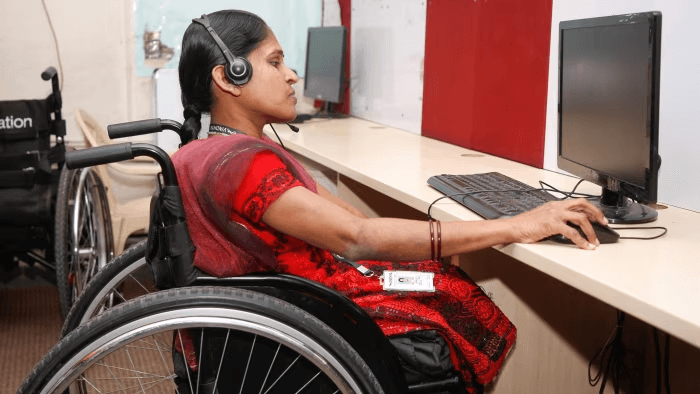
- They give training centers with ramps, lifts, and helpful technology, giving access to learning for the physically challenged
- They offer flexible learning options, like home-based classes
- They light dreams in specially-abled youth to go after a career in technology that they never even thought of
Some of the wins that we are now starting to see are:
- Specially-abled people can take care of themselves with money
- Children’s education and career goals are being paid for by families
- Trained students go ahead and train other specially-abled young people, and this creates a ripple effect
For example, one SAVE student from West Bengal said: “I never thought I would be working in an IT company. But after finishing digital marketing training with Anudip Foundation, I got a placement in a remote customer support role. Today I am earning money, taking care of my family, and I am confident about my future.”
Real Life Impact Stories
Visually Impaired Youth of Odisha: An easy IT training student on screen reader technology was placed as a junior data entry after CSR-paid easy IT training.
Physically Handicapped Women of West Bengal: Digital marketing trained students have started freelance businesses, working from home and earning stable incomes.
Hearing Impaired Students in Kolkata: A group of specially-abled young people trained in graphic design and web development now work with top IT firms.
These examples show that disability employment projects don’t just teach skills they empower changemakers who bring whole communities forward and change the views around disability in society.
Corporate Leaders in Disability-Inclusive CSR Training
There are several big corporate champions of disability-inclusive digital skills in India:
- Accenture: Gave INR 48 million in grants to support training of persons with disabilities in job skills through the SAVE program
- Lenovo: Works with NGOs to give easy laptops and helpful technology to training centers
- Wipro Foundation: Works with disability groups to run IT training programs on the ground
- IBM: Works toward creating easy tech solutions and job options for specially-abled people
All of the above are in line with the UN’s Sustainable Development Goals (SDG):
- SDG 4: Make sure inclusive and fair quality education and help global learning chances for all
- SDG 8: Make sure continued, inclusive and sustainable money growth, full and productive jobs and decent work for all
- SDG 10: Reduce inequality within and among countries
Companies match business goals with social goals so that the CSR investments pay back in the long run for inclusion of people with disabilities.
Who Can Be Helped by Specially-Abled Vocational Training
Specially-abled vocational training in India is focused on several groups:
- Visually Impaired Youth: People who want IT careers using helpful technologies like JAWS and NVDA screen readers
- Physically Challenged People: Young people with physical movement limits who can work in remote jobs or freelance jobs
- Hearing Impaired Students: Young people who want to learn graphic design, web development, and digital content creation
- Neurodiverse Learners: Learning disabled students who are helped with personalized learning methods
We at Anudip Foundation let the specially-abled person with basic digital know-how come and succeed. The courses we run are broken down into simple steps so even a complete beginner can learn IT skills with no fear.
What are the Best Disability Employment Programs in India?
These are some of the best places to start:
1. NGO-Led Programs
NGOs such as Anudip Foundation give free easy IT training to poor populations. Our SAVE program is training in IT services, digital marketing, and customer support made just for specially-abled youth.
2. Government Plans
The Government of India runs programs such as Accessible India Campaign and ADIP (Assistance to Disabled Persons), which give helpful devices and vocational training help.
3. Corporate Apprenticeship Programs
Disability-inclusive training is paid for by most companies under their Corporate Social Responsibility (CSR) programs. This connects specially-abled people who were trained to real job chances.
4. Skill India Mission
According to the India Skills Report 2025, over 50% of students in secondary and higher education in India will be reached by vocational training by 2025 with growing focus on disability inclusion.
5. Online Learning Platforms
The online learning platforms now have closed captions, screen readers, and easy designs for specially-abled students.
What Are The Careers That Accessible IT Training Can Open Up?
Accessible digital skills development in India will lead to many career paths. People with special abilities can go after:
- IT Support Specialist – gives technical support through remote tools
- Digital Marketing Executive – manages social media and online promotions remotely
- Data Entry Operator – enters data through helpful technology
- Customer Support Representative – answers customer questions through chat or email
- Graphic Designer – creates graphics through accessible design software
Even for industries not usually linked with remote work such as education, healthcare, or e-commerce, digitally skilled specially-abled people can make a difference. For example, visually impaired AI-trained people can help companies improve their accessibility parts, or hearing-impaired graphic designers can create easy visual content for businesses.
What are the Challenges of Disability Employment Programs?
While there is growth, there are challenges:
- Building Barriers: Not many training places have ramps, elevators, or wheelchair-friendly washrooms
- Cost of Helpful Technology: Screen readers, special keyboards, and adaptive software can be expensive
- Gaps in Awareness: Specially-abled persons and their families hardly know how digital skills can change their lives
- Employer Bias: Workplace discrimination and lack of inclusive hiring practices are still hurdles
However, these needs can be met by groups like Anudip Foundation. Our group adds value in the form of easy training places, free helpful technology, outreach to communities, and direct placement services through our SAVE program.
Why Should NGOs Support Inclusive Digital Skills Training?
Because NGOs are a tool of inclusion!
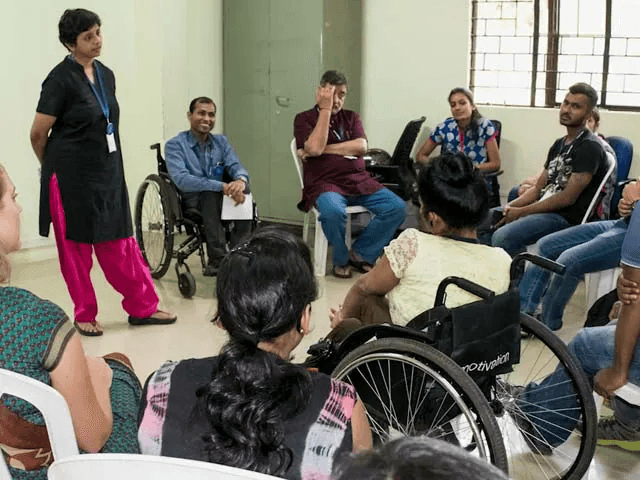
While private groups can gain a great deal by giving IT skills to fee-paying students who can use helpful technology, there are groups like Anudip Foundation with a goal of making training available to poor communities, especially specially-abled youth. For example, our SAVE (Specially Abled Vocational Education) project in West Bengal and Odisha has easy IT training! Specially-abled students from rural towns are now being shown global job chances.
So, without NGO help, digital skill training will continue to be for the rich, reaching only urban specially-abled people with means. Our projects have shown that when specially-abled youth learn digital skills, it not only changes their job. It changes whole families. Empowered people pass on that knowledge to their peers, family, and neighbors, multiplying their impact.
How is Anudip Foundation Building an Inclusive Workforce?
At Anudip Foundation, we believe that technology has to empower lives, not separate them. That is why we started the SAVE program in 2014—accessible, affordable, and specially created for specially-abled youth. Our focus area:
- Giving easy IT basics to physically and visually challenged young people in West Bengal and Odisha
- Using helpful technologies like screen readers, adaptive keyboards, and special software
- Working with CSR partners like Accenture, Lenovo, and Wells Fargo to grow funding for skills development that is disability-inclusive
- Building true job chances by helping with direct placement support as well as employer outreach
Above all, with empathy paired with technology, we see digital skills training as a way of more than just creating a workforce. It is respect, freedom, and equal chances for all. With growing coverage of inclusive digital skills training in India for all areas, we are working toward a balanced future with specially-abled people adding equally to the digital economy.
Conclusion
Disability should never be a limit on potential. That is why inclusive digital skills training in India is more than an educational course. It’s a tool of empowerment, freedom, and social change.
Through Anudip Foundation’s SAVE program, hundreds of specially-abled youths have learned easy IT skills, started careers, and helped their families get out of poverty. Together, we can make a future where every specially-abled person in India urban or rural can do well in the digital world.