– By Madhuparna Roy Sukul
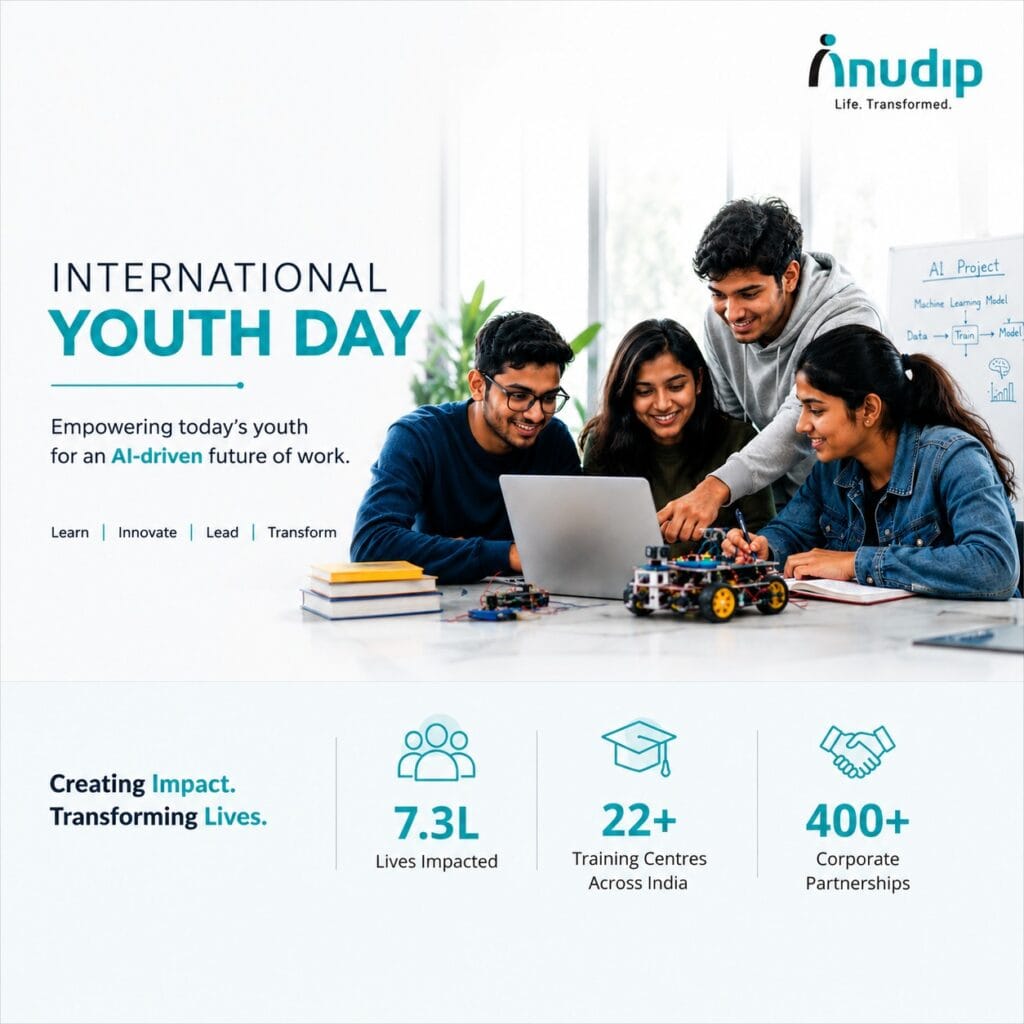
International Youth Day
International Youth Day is observed by the United Nations every August 12, highlighting the challenges young people face. Therefore, the aim is to push governments, employers and institutions toward real progress on education, mental health and decent work.
The idea for this day actually came from young delegates at the World Youth Forum in Vienna, back in 1991. By 1999, the UN had officially got on board with it, making International Youth Day a reality. Over the years, it has become a bit of a milestone for thinking about how we’re going to get young people into work and what the future of work is going to look like.
The theme for this year is “Different Contexts, Common Aspirations“. It’s just a reminder that what young people are all really looking for is pretty basic – a bit of dignity, some opportunities and the chance to build a sustainable life that works for them.
Today, Indian youth are entering a job market that AI is already reshaping. 9 out of 10 Indian employees now use generative AI at work, and fresher hiring is set to rise 40% in 2026-27, a sharp jump from last year.
However, there is still a considerable gap between hiring intent and the hiring criteria. What employers want now is different. They want young people who can judge AI’s output, communicate it clearly, and adapt as the tool or task evolves.
A market that is changing faster than the classroom
The numbers behind this shift are what really matter when we’re talking about youth in India. And the stats are pretty impressive when it comes to India versus the rest of the world. While globally youth employment actually went up to 12.4% in 2025, India is showing some encouraging signs in this area.
According to the India Skills Report 2026, Indian youth are on the up when it comes to employability. But it’s not all plain sailing. Things are still pretty uneven:
- Employability across the country is on the rise, recording a notable jump from 54.81% to 56.35%.
- For the first time, women are outpacing men in employability, at 54% versus 51.5%, a notable shift.
- India already holds 16% of the world’s AI talent, and is on track to reach 1.25 million AI professionals by 2027.
But, even with all this on-paper progress, the reality isn’t always so rosy. Progress is a two-edged sword and sadly for half of India’s youth, they’re still not even job-ready. That gap is felt most by youth in smaller towns, especially first-generation learners who often lack even a device or reliable internet connection.
Why digital skills are necessary but not sufficient
Digital literacy has become the gateway for a job, but that’s not the advantage anymore. NASSCOM’s Academia Survey highlights over 80% of Indian colleges report rising demand for problem-solving, teamwork, critical thinking, and creativity in fresher hiring, indicating technical skills alone aren’t enough anymore.
That’s the gap AI readiness has to close. It’s not about knowing one tool. But it’s about the judgement to question AI, the communication to explain it, and the adaptability to keep pace with change.
This is another reason why youth employment cannot stop at “securing a job“. Instead, a sustainable livelihood needs to survive a tool being replaced or a role being automated. That resilience comes from individuals who can redeploy their skills, not just repeat a fixed set of tasks.
From Digital Skills to Green Jobs: Anudip’s Fresh Approach to Youth Employability
Menoka Devi grew up in Assam watching her father drive an auto-rickshaw to support their family. She wanted to build something of her own, so she enrolled in a Customer Care Service with AI course at Anudip in Assam. Today, she works as a KYC Associate at Slice Small Finance Bank in Guwahati, earning a ₹21,000 a month.
What got her there wasn’t one technical skill. It was the mix of digital and AI skills for a customer-facing role. Paired with the communication and confidence to thrive in it. This is exactly what Anudip Foundation builds in young people like Menoka.
For more stories like Menoka’s, read Anudip’s Impact Stories.
The goal isn’t just to run a course and hand out certificates. It’s to equip underserved youth with digital and AI skills, along with the critical thinking, communication, and collaboration to navigate a job market that keeps evolving, well after they’re hired, not just when they are. This also means building a green workforce, as sustainability draws much relevance to employability, like AI fluency. Anudip reflects this shift, training youth from marginalised communities for India’s booming renewable energy sector.
Skilling programmes and wider employer partnerships of Anudip are built around that longer horizon, not one job, but the version of the job market that will exist five years from now. Behind every employability statistic is a specific person. Someone deciding, often for the first time in their family, what kind of working life is possible for them.
A different question to ask on International Youth Day
On this International Youth Day, the usual question is what young people need to be ready for the future of work. Rather, the question this year should be what “ready” means when the tools, the roles and the expectations keep shifting.
Digital skills get a young person into the conversation. Judgement, communication and the willingness to keep learning are what let them stay in it. Preparing youth for an AI-driven future of work was never really about the AI; it was always about devising people who can adapt to whatever comes after it, too.