
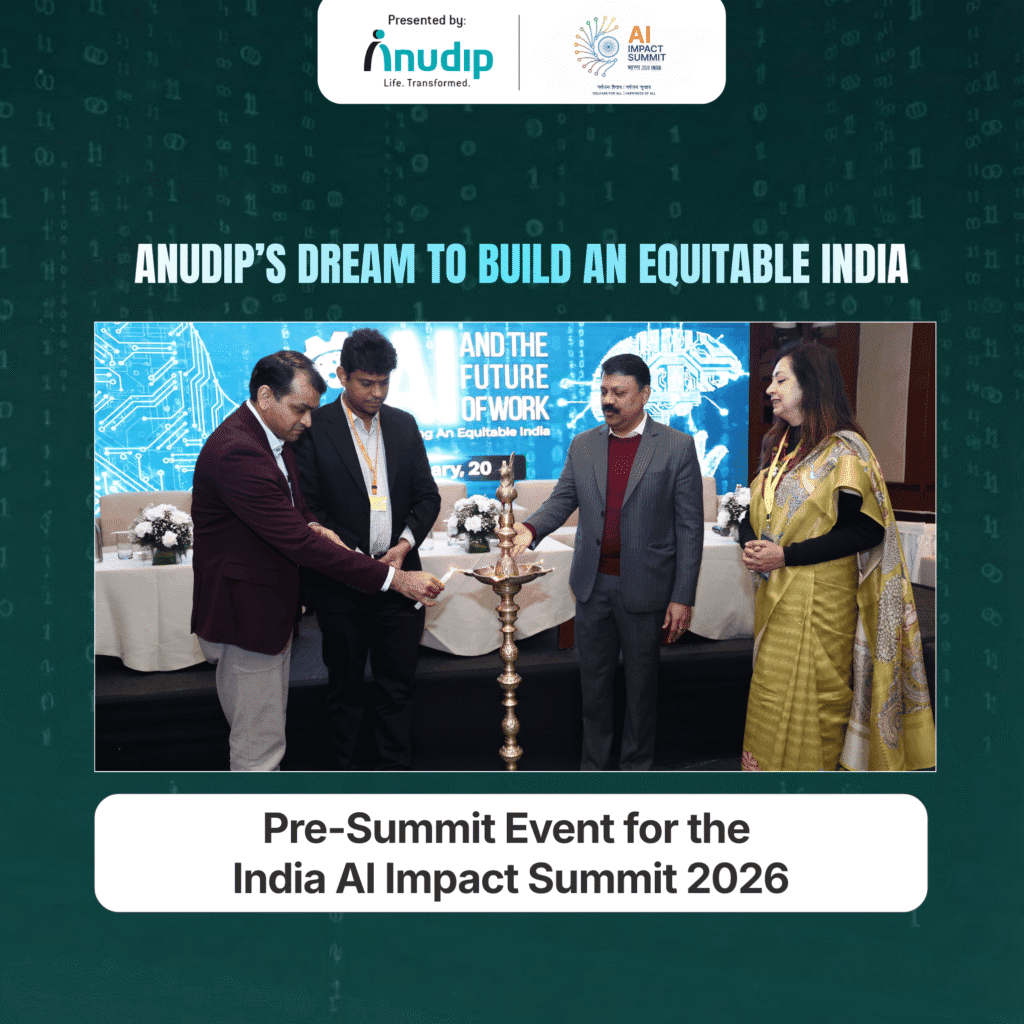
– By Madhuparna Sukul
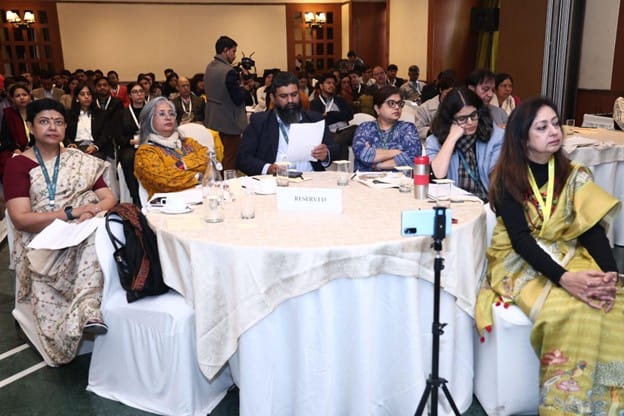
On January 20, at the India Habitat Centre, Anudip Foundation summoned a kaleidoscopic assembly of visionaries for a Pre-Summit overture to the India AI Impact Summit 2026. It marked a clear break from the routine—a moment that pushed conversations beyond the present and toward what the future of AI could meaningfully become.
From spectacular student AI innovations to alumni journeys, the pre-summit celebrated the power of opportunity meeting determination. But there was a larger purpose. Every discussion, every panel, every conversation was driven by one core question, “How to ensure AI is inclusive for all, without any discrimination?”
The Big Picture: India’s Blueprint for Inclusive AI
When Prime Minister Narendra Modi announced the India AI Summit 2026 at the France AI Action Summit, he set a vision bigger than algorithms. It’s where AI bridges opportunity rather than widening inequality.
To make it a reality, the Govt of India launched 8 foundational AI projects under the IndiaAI mission. The aim is to build native AI models trained on Indian languages and designed to tackle real-world challenges. According to the IT Ministry, from multilingual communication to scientific breakthroughs, healthcare innovation to industrial transformation, the models lay the groundwork for India’s AI leadership. And that’s not all! With IndiaAI Mission’s Rs. 10,300 crore funding and 38,000 GPUs, you’ve got infrastructure meeting intention at scale.
But infrastructure alone doesn’t create equity. People do. And that’s where Anudip Foundation steps in. With its Pre-Summit Event for the India AI Impact Summit 2026, Anudip created something rare – a space where vision meets action.
More than a Prelude: Anudip’s Pre-Summit Event for the India AI Impact Summit
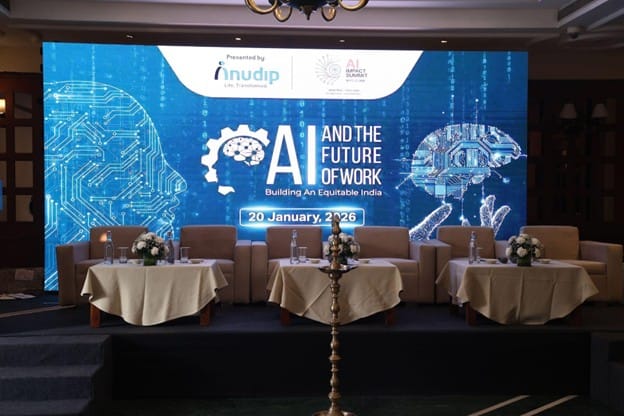
At the Anudip Foundation’s pre-summit AI event, the focus was sharp and the message, clearer than ever. Titled AI & the Future of Work: Building an Equitable India, this wasn’t just another industry talk shop. It was a mission statement.
As we move toward a future where humans and algorithms share the workload, the stakes are high. The conversation here wasn’t just about efficiency; it was about inclusivity. Because in the age of Artificial Intelligence, progress is meaningless if it isn’t equitable. This event stood out as a poignant reminder that while the machines are coming, the mission must remain human-centric.
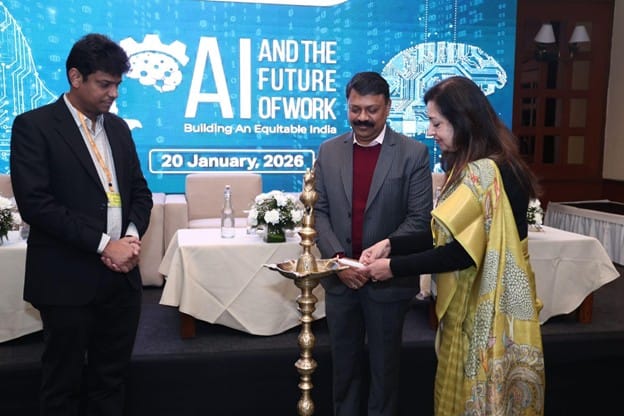
The event began as it meant to continue, with the lamp-lighting ceremony. Joining Anudip’s CEO, Ms. Monisha Banerjee, was our keynote speaker, Shri Mohammed Y. Safirulla (IAS), Director of the India AI Mission, MeitY, and distinguished speakers, Shri Anandrao V. Patil (Senior IAS, Additional Secretary – Higher Education) and Shri Yogesh Brahmankar (Innovation Director, Ministry of Education, AICTE).
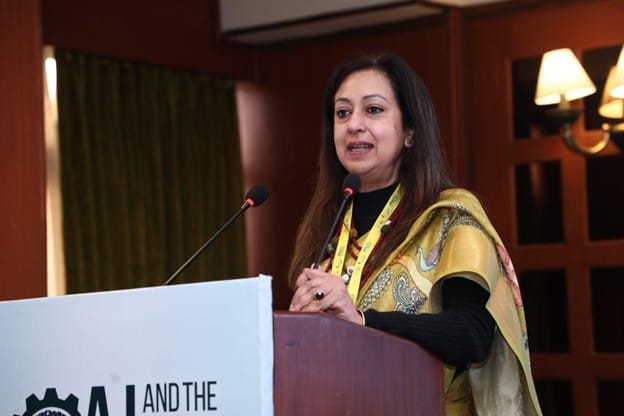
Next, Ms. Monisha Banerjee set the ball rolling with her welcome note on Anudip’s vision for equity in the age of algorithms.
The Voices that Set the Tone
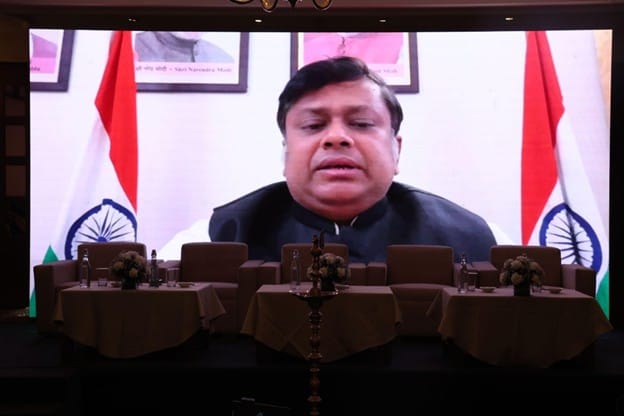
The tone was set by a heartfelt video note from Hon’ble Shri Sukanta Majumder, Minister of State for Education and DoNER. He commended Anudip’s initiative and urged the audience to transform discussions into “concrete, actionable, and measurable changes.” Because let’s face it, in the world of AI and development, good intentions without execution are just expensive PowerPoint presentations.
Then came the keynote. Shri Mohammed Y. Sarfirulla highlighted the seven pillars of the IndiaAI Mission, previewed the upcoming IndiaAI Summit and emphasized impact through the People–Planet–Program framework, “The objective, or the mantra as we call it, is impact—how AI drives change across people, planet, and progress.”
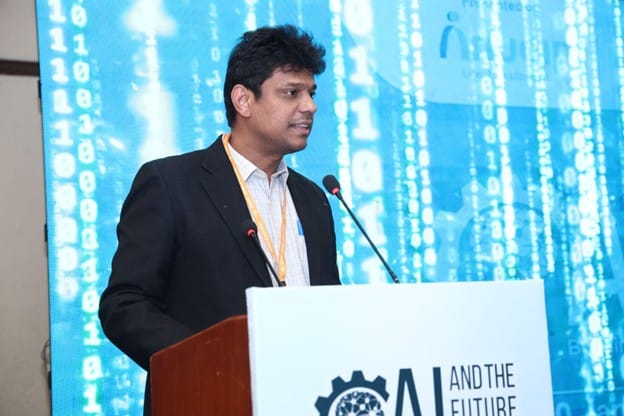
People. Planet. Progress. The three words perfectly capture the fundamental purpose of AI.
The conversation intensified with the insights of two of our distinguished speakers:
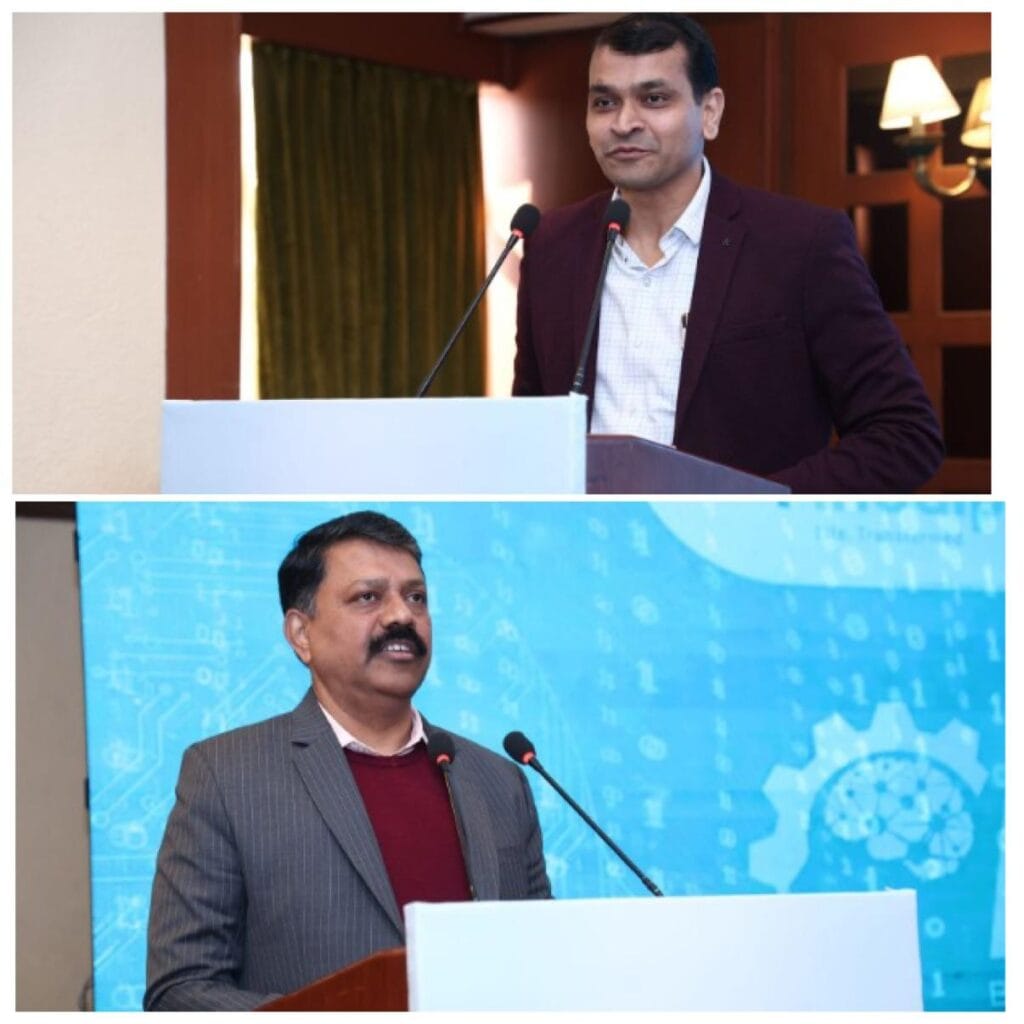
- Shri Anandrao V. Patil – Who rightly pointed out how Gemini hit 50 million users in 60 days, but electricity took 46 years. This is the quantum jump, he says, and that AI isn’t the future, it’s now.
- Shri Yogesh Brahmankar – Who emphasized how a graduate joining a company in 2024 can become obsolete by 2048 if they stop learning. The question, he says, isn’t whether AI will change everything—it’s whether we’ll keep pace.
With these pressing questions in mind, AI & the Future of Workforce, the pre-summit event by Anudip, continued to investigate and find actionable solutions for India’s youth and women from marginalized communities.
Our Panel Discussions: The Search for Action
But the Pre-Summit Event for the India AI Impact Summit 2026 was not just another conference. It had a lot more to offer.
The conversations were based on three critical themes:
- AI at Scale: Power of Collaboration – The dialog highlighted how to create continuous AI learning pathways that demonstrate relevance and drive economic mobility for marginalized youth.
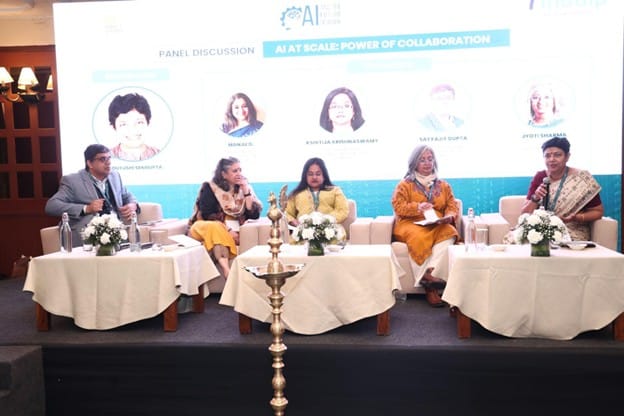
- Reskilling for Resilience – The discussion stressed that the over-reliance on technology, like AI, is leading to cognitive degeneration and how targeted training programs can help cognitive growth among students.
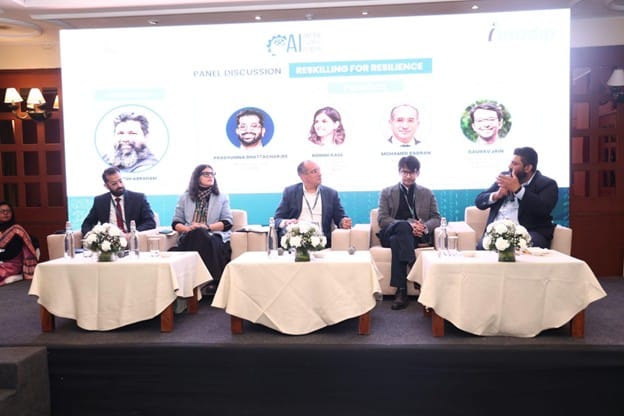
- AI Solutions for Inclusion – The conversation was about how to train AI in a structured way to avoid biases, so that the output is more inclusive.
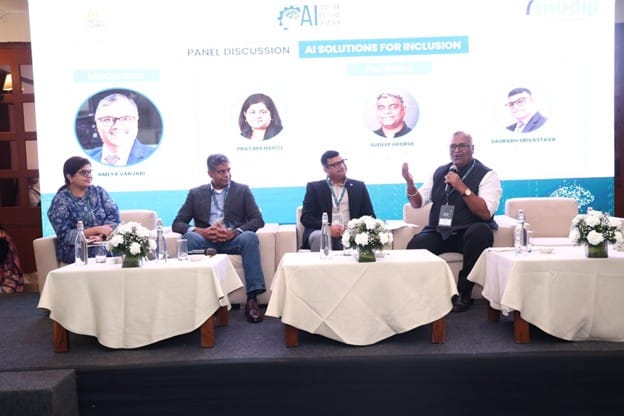
The panel discussion featured some eminent speakers from the government bodies, industries and social organizations, like:
Government Bodies
Global Corporations
- Microsoft
- Accenture
- Lenovo
- EXL (Exlservice Holdings)
- Oneworld Colab Pte. Ltd
- iMerit
- World Bank
- GIZ (Deutsche Gesellschaft für Internationale Zusammenarbeit)
- Sattva Consulting
Social Organizations
- Michael & Susan Dell Foundation
- Tata STRIVE
- NASSCOM Foundation
- Kantara India Foundation
The panels brought together diverse leaders who united for one goal, making AI accessible to everyone through collaboration and inclusive design.
Anudip’s Intervention: A Showcase of How Far we are through in the Action
As Monisha Banerjee, CEO of Anudip Foundation, powerfully stated:
“The India AI Mission’s charter is primarily to be able to democratize AI innovation, AI talent, and AI opportunity for everybody. At Anudip, we attempt to do it through dialogue, participation, and actual action to be able to bridge the divide that AI could possibly create if we do not take corrective measures right now.”
Monisha’s words resonated deeply, but what followed was the most powerful testament to that vision, the voices of those living it.
Cup of Connections: Sharing Transition Stories
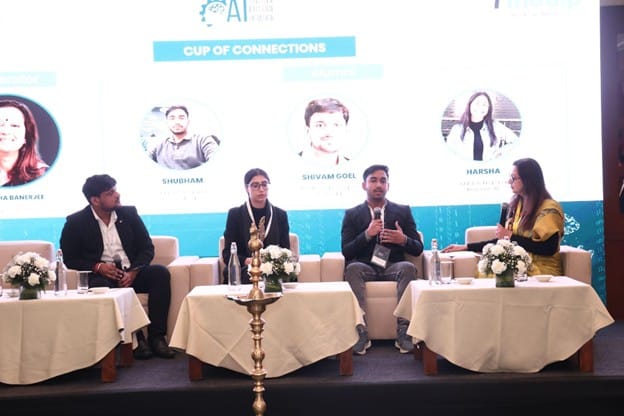
Cup of Connections provided something powerful. It was a heartfelt conversation between CEO Monisha Banerjee and Anudip’s alumni, sharing the stage with eminent leaders. These were not just anecdotes, but real stories about their journey from training to work, about goals and the urge to keep learning. Because in the AI economy, it’s not just about reaching the destination, it’s about the will to continue.
Breaking Barriers: First-Generation Learners Leading the AI Revolution
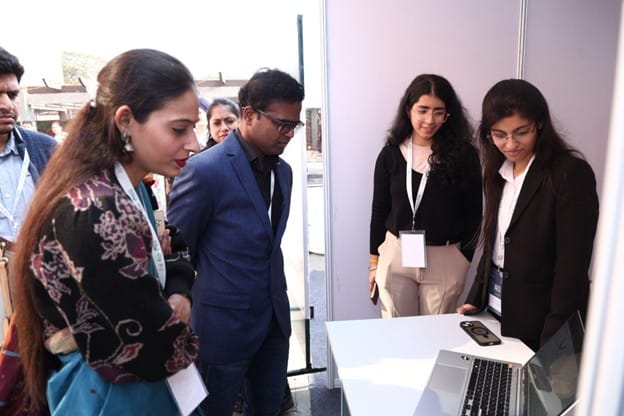
The student showcase gave a glimpse of what the future might hold. Attendees witnessed some innovative projects like an AI-powered financial tracker and planner, an AI-automated interviewer system, and UltraWatch: Micro Disaster Guard, a DIY disaster warning system created by first-generation learners, young men and women who had never owned a computer at home, yet dared to dream and innovate.
Final Thoughts: From Vision to Reality
The pre-summit really paid off. It started with an opportunity to network over a great lunch, a photo booth for framing the groundbreaking moments forever, and a pledge wall where people put their word of honor for building an inclusive AI future.
As AI starts to take over more and more areas of our economy and society, we know that the risk of deepening inequality is a very real one. But we also know that the opportunity to create a more level playing field is there – if we decide to take it.
Anudip’s pre-summit showed what it means to pull together for the greater good. That it’s not just about government, or industry, or civil society, but it’s about all of us, working together to make sure that no one in India is left behind in the AI transformation.
Because in the end, an equitable AI future isn’t something we stumble upon. It’s something we build together.