– By Shubhodeb Bhattacharya
Science for a Changing World of Work
Every year on 10 November, World Science Day brings one idea to the centre of public life: science exists to serve people. It should reduce conflict, expand opportunity and protect the planet. This year, the day turns to how science helps nations find common ground. That focus speaks directly to young people. Artificial intelligence, automation and the green transition are reshaping work across borders. Roles emerge and fade within a few years. In this landscape, how quickly young people learn matters as much as what they know.
This blog traces the origins, theme and message of the day. It then examines how scientific thinking builds learning agility in first-generation learners.
Read more: Skill Based Volunteering: How Employees Can Help Young People Get Job-Ready
Understanding World Science Day for Peace and Development
UNESCO proclaimed the observance in 2001 and first celebrated it in 2002. It pursues four goals: raising awareness of science’s role in peaceful, sustainable societies, encouraging nations to share scientific knowledge, renews the commitment to use science for society’s benefit. It also highlights the challenges science faces, including unequal access. Three questions explain the day further.
What is the theme for World Science Day 2026?
UNESCO announces a new focus each year. The World Science Day 2026 theme is “Common Ground through Science Diplomacy.” Science diplomacy uses scientific cooperation to build trust between nations and solve shared problems. Climate change, public health and artificial intelligence cross every border. Evidence offers a language all sides can work with.
For young people, the meaning is practical. Their workplaces are increasingly global. Teams span countries and problems span disciplines. Shared evidence becomes the starting point for every collaboration they lead.
Why is World Science Day celebrated on 10 November?
The date reflects a global commitment. In 1999, UNESCO and the International Council for Science convened the World Conference on Science in Budapest. Its declaration called for science in the service of peace and development. In 2001, UNESCO proclaimed 10 November as the annual observance.
The slogan for World Science Day
The day’s full name serves as its standing message: science for peace and development. Each annual theme adds a focused call to action. Together, they express one principle. Knowledge creates the greatest value when shared, trusted and used for the common good. That principle carries special weight in today’s world of work.
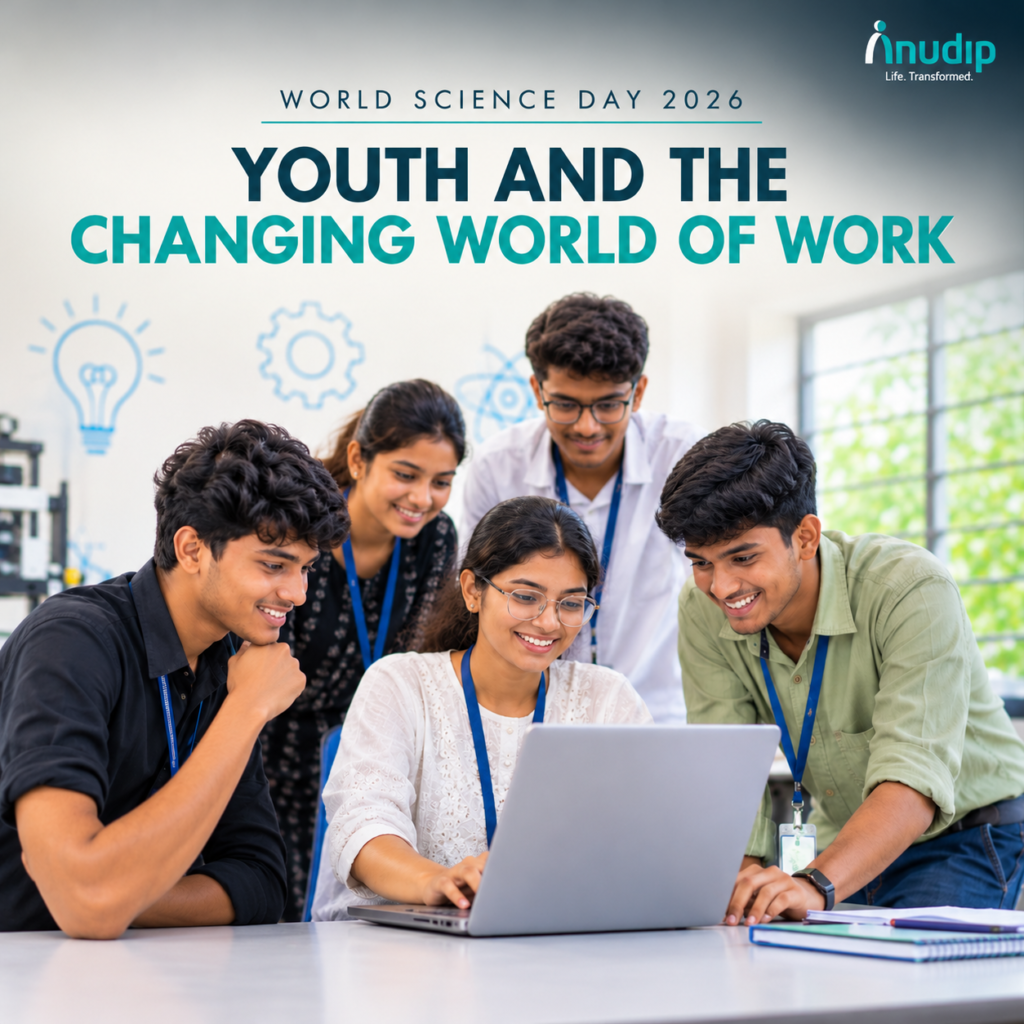
World Science Day and the Changing World of Work
Work is being redesigned in real time. Artificial intelligence now drafts, analyses and predicts. Renewable energy and climate-smart agriculture are creating new roles. Skills expire quickly. The people who stay ahead are those who keep learning.
This shift demands scientific habits: reasoning with data, testing ideas and adapting when evidence changes. For first-generation learners from India’s margins, access to these habits has long been uneven. The gap is one of access, not ability.
Anudip Foundation works where this gap is widest. Our programs help young people build AI-native and market-aligned capabilities, alongside 21st-century life skills such as critical thinking and communication. The focus sits on learning agility: the capacity to learn, unlearn and relearn as markets shift.
For donors, this approach builds capability that renews itself as the economy changes. Science becomes a lifelong tool for navigating disruption.
How World Science Day Inspires Learning Agility in Young People
Science is a way of thinking. It asks learners to question, test and revise. These habits also build peace. People who weigh evidence resist misinformation, resolve disagreement through dialogue and work across differences.
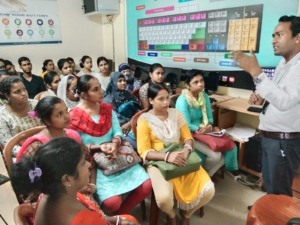
Anudip’s classrooms build these habits through practice. Educators serve as facilitators. Learners start with a real problem. They explore, experiment and reach understanding through their own reasoning. The facilitator guides as a mentor, offering direction at the moments that matter most.
Consider a first-generation learner entering a technical classroom for the first time. Her first assignment is a problem to investigate. She listens, tests an idea and adapts when it fails. Each adaptation comes faster. By the end, she applies the same method to challenges at work and in her community. Her journey moves from curiosity to agility to contribution.
The same inquiry-led culture extends to schools, where equipped educators bring it to younger students early.
Read more: Skill Training for Rural Youth: A Practical Path to Self-Reliance
Where Anudip Fits: Agility for Today and Tomorrow’s Work
This journey repeats across these classrooms, with 7.3 lakh learners reached to date across India. The work prepares young people for the jobs of today and the shifts of tomorrow.

A tiered AI readiness pathway moves learners from AI literacy to confident use and then to building with AI. Green skills programmes open routes into the climate economy. Educator programmes in schools and colleges equip students to lead inquiry-based classrooms, extending this culture well beyond Anudip’s centres. Each strand builds learning agility, so capability renews itself as markets shift.
Conclusion: Science as a Shared Advantage
World Science Day for Peace and Development reminds the world that science is common ground. Its value grows with every person who can use it. In a changing world of work, scientific thinking gives young people a durable advantage: the ability to learn continuously, adapt quickly and contribute meaningfully. World Science Day 2026 offers a moment to widen access to that advantage.
First-generation learners already bring curiosity and resilience. With the right learning environment, they turn disruption into direction for their economies and communities.
FAQs
1. How does World Science Day connect to the future of work?
The day promotes science that benefits all of society. As AI and the green transition reshape jobs, scientific thinking helps young people adapt. Anudip Foundation builds this learning agility in first-generation learners and links it to market-aligned careers.
2. Why does learning agility matter for young people today?
Skills lose relevance quickly as technology evolves. Learning agility lets young people learn, unlearn and relearn continuously. Anudip’s facilitator-led, inquiry-based classrooms develop this capacity alongside technical and 21st-century life skills.
3. How does science learning contribute to peace and development?
Science learning builds evidence-based thinking, dialogue and economic participation. Each strengthens social stability. Organisations like Anudip Foundation widen access to these capabilities for first-generation learners, who then contribute to their communities.